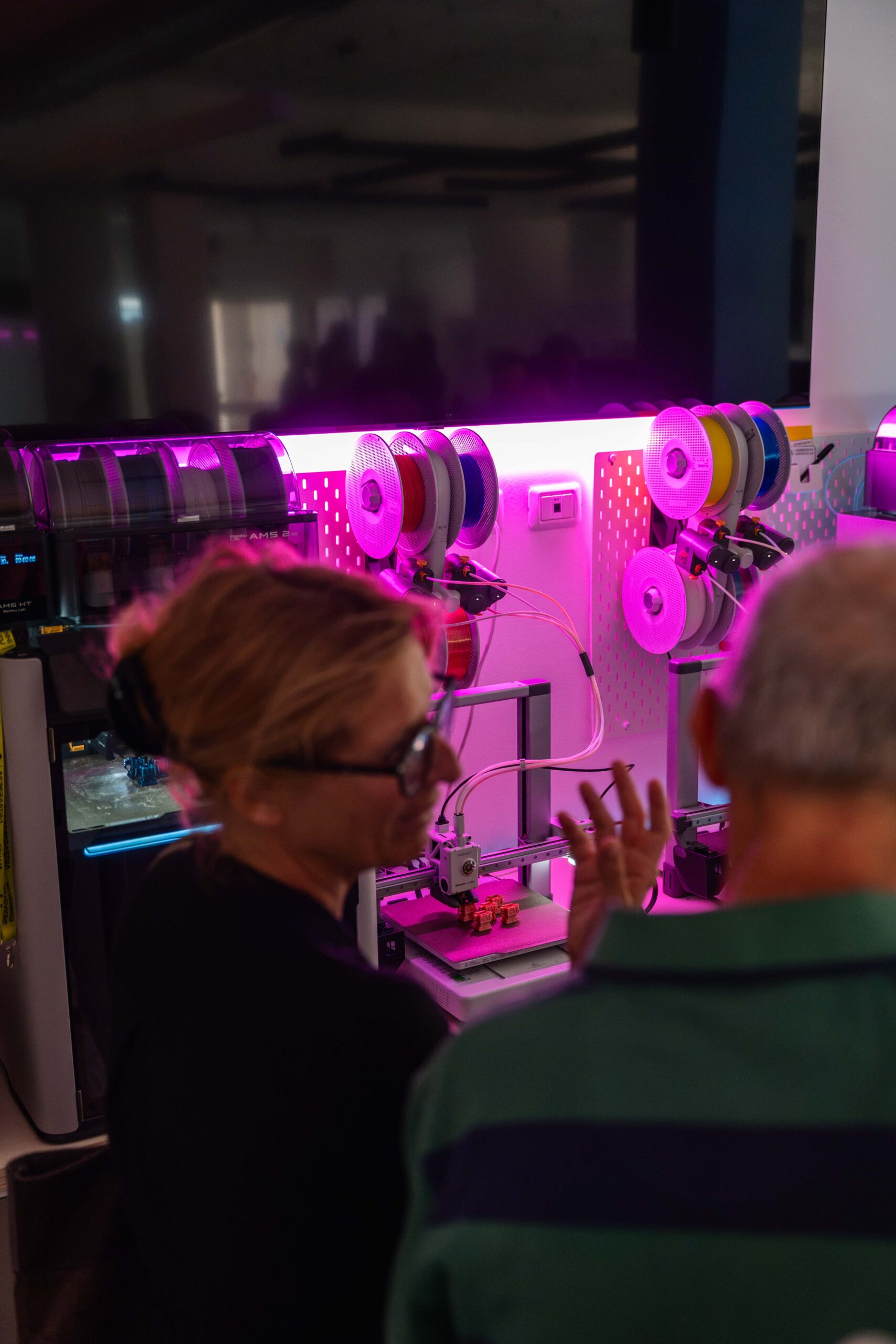
Chroma Garden was the first artist-in-residence program hosted by Asperastra Innovation Lab in Trieste. It was created to bring artistic practices—which utilize tools that are already part of everyday life here, from 3D printing to generative AI to sound—into the Lab and observe them in a context different from that of a course or workshop: within the framework of an artist’s research process and the development of an exhibition project.
The title referred to a garden, but not in a decorative or reassuring sense. The phrase accompanying the concept—“We don’t feel. We don’t choose. We adapt”—immediately set the direction for the work. What Luca Mingolla envisioned was not a harmonious landscape, but a space where care and decay coexisted, where forms seemed to grow, change, and resist. Chroma Garden was built around this tension.
Luca Mingolla, born in 1988, is a sculptor and visual artist. His training spans architecture, illustration, and graphic design, and in recent years he has focused increasingly on sculpture and hybrid processes. In the project presented during his residency, the figures had an ambiguous presence: bodies—or quasi-bodies—treated as forms that were both fragile and precise at the same time. 3D printing was incorporated into the work as a construction technique, but also as a form of expression. The sculptures engaged in a dialogue with digital images generated through generative AI, while always maintaining a strong focus on the material, the surface, and the object’s posture in space.
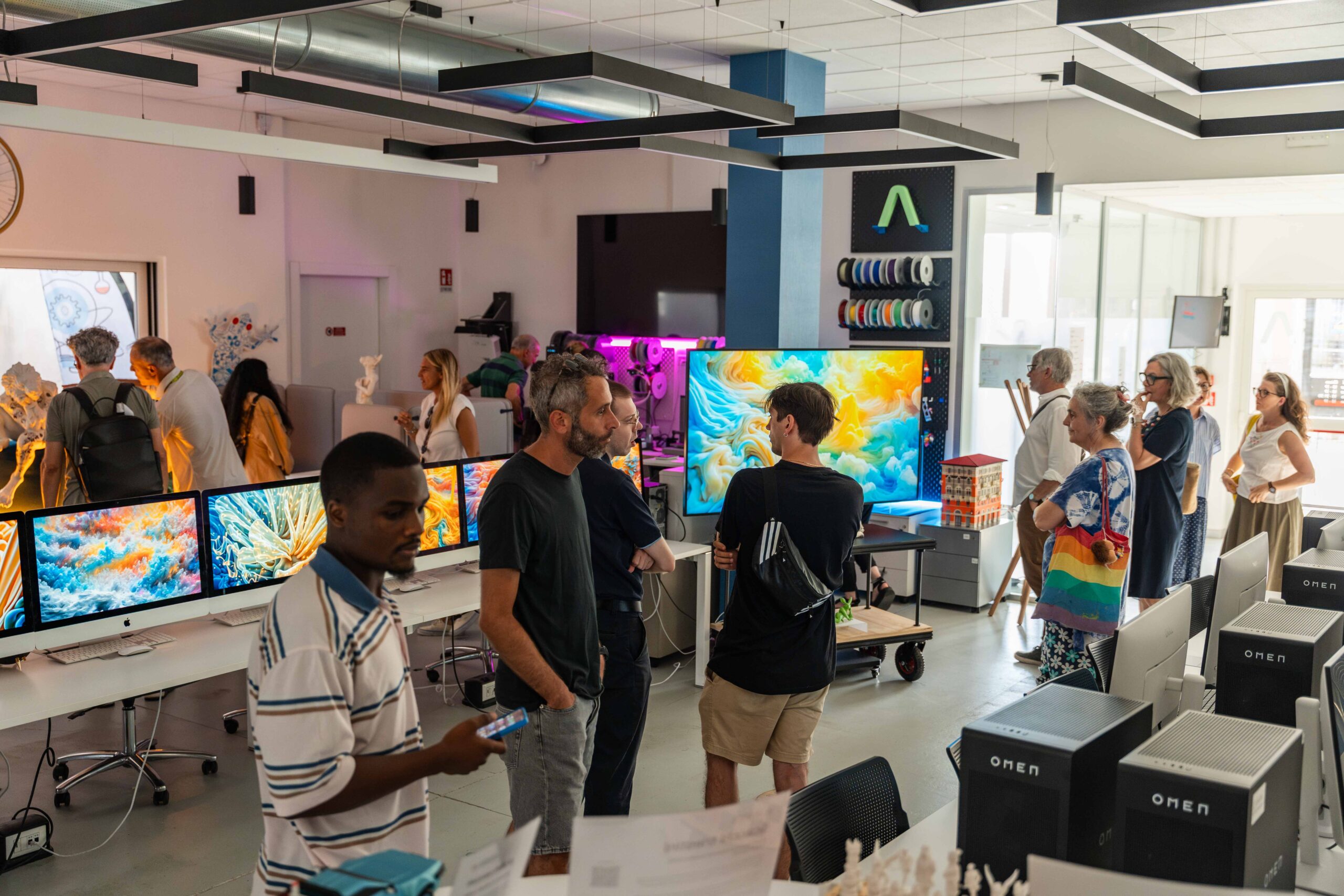
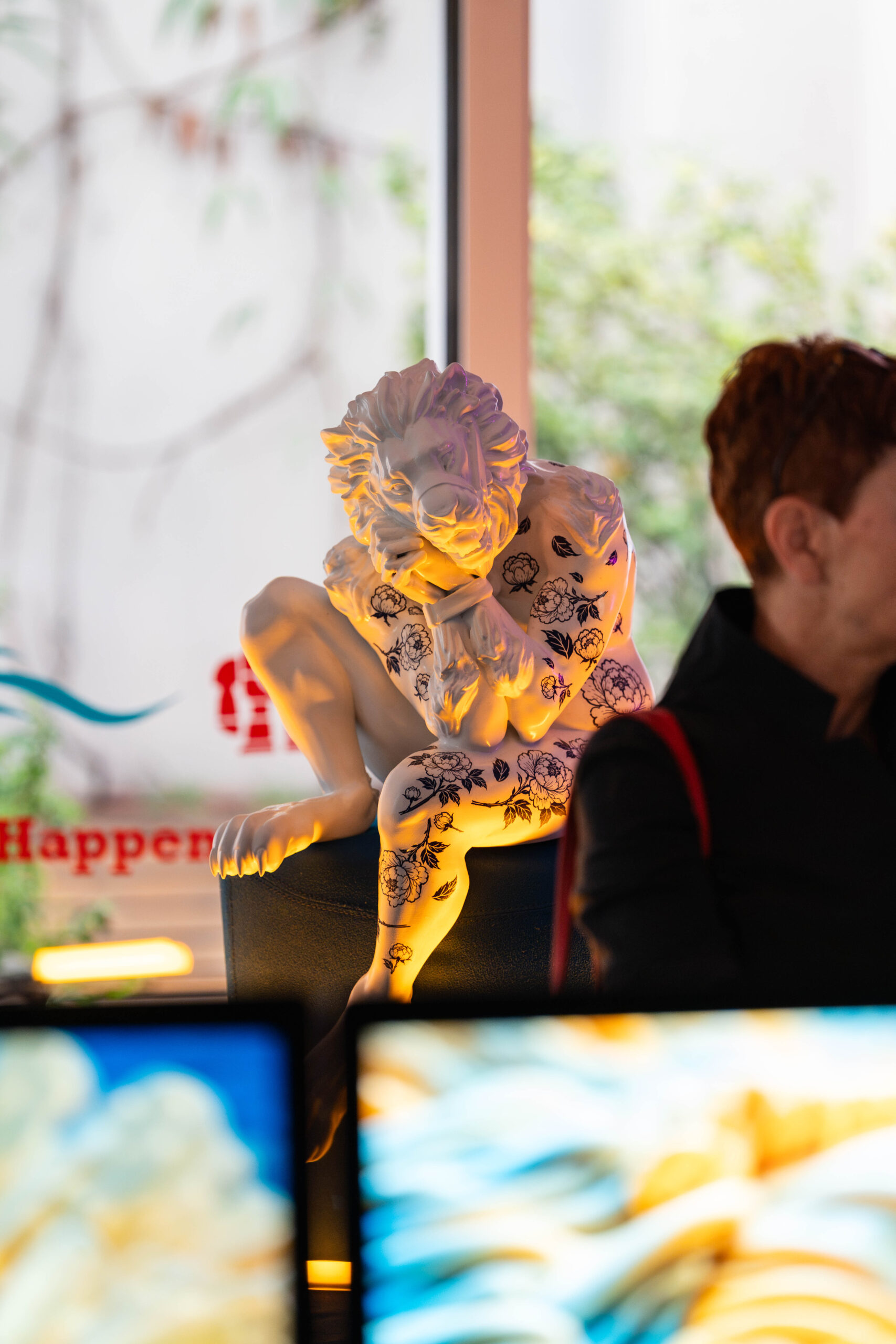
This was one of the most interesting aspects of the residency: technology wasn’t showcased as a gimmick, but was integrated into an artistic practice that used it to create form, atmosphere, and visual tension. It’s also why Chroma Garden fit so well within Asperastra. Not because the Lab became a gallery in the traditional sense, but because it opened up a space where tools and processes that are usually viewed from a technical perspective could be put to work in a different way, within a coherent visual exploration.
The opening night on July 3 added a second dimension to the project. Following Mingolla’s presentation, the focus shifted to sound with a DJ set by Gianluca “Jazza” Guerra, a DJ and music consultant who has been active for years in Trieste’s electronic music scene. His presence served not merely as an accompaniment, but as a temporary extension of the residency: a performance designed to engage with the visual work and the atmosphere of the installation.
For the opening, Jazza crafted a set that interwove personal samples with material generated using Suno, an AI software used exclusively for that evening. Here, too, the point was not to showcase a tool, but to see what happens when generative material enters an already defined practice and is shaped to serve a specific intention. Alongside Mingolla’s sculptures—static and physical—sound introduced another mode of presence: more mobile, more unstable, and more closely tied to the duration of listening. In the same space, on the same evening, two different uses of similar technology became more clearly distinguishable.


The exhibition ended on July 10, after a week on view at the Lab. A few days later, what remains above all is the impression of a project that clearly highlighted a concrete possibility: using the lab not only as a place for production or technical training, but also as a space where artistic research can take shape and find a suitable context in which to be viewed.
For Asperastra, Chroma Garden is not an isolated incident. It's just the beginning.
Other exhibitions and residencies will follow, as part of a program that will increasingly highlight the Lab’s artistic dimension and its dialogue with technological tools, languages, and processes. If this first residency has broken new ground, the next steps will help us understand just how far it can take us.