

Local AI for Home Life – WORKSHOP with Alessandro Piemontesi
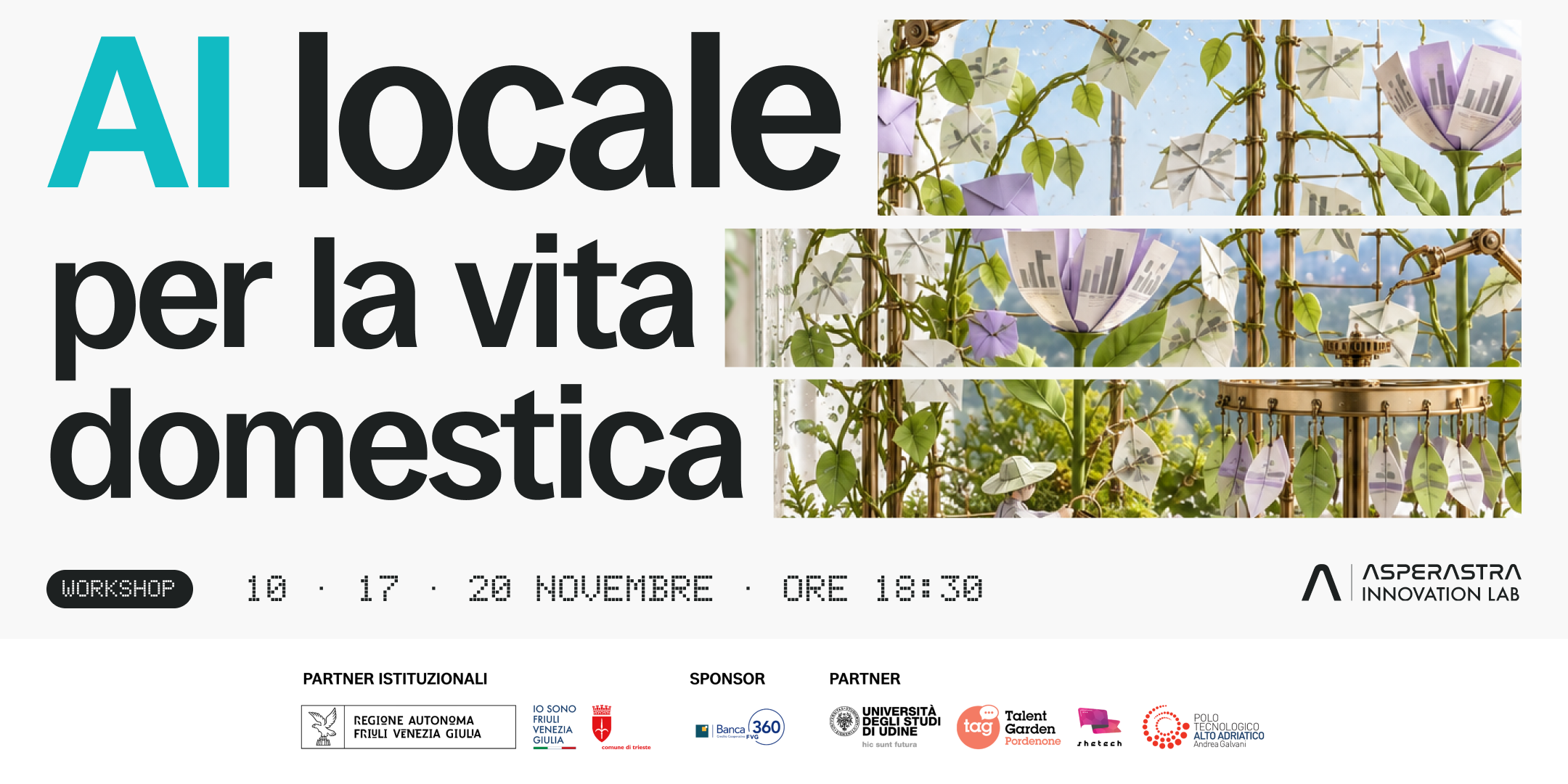
Three evenings at the Lab to learn how to use local AI for household tasks: documents, bills, medical reports, and the family budget.
With winter comes heating bills, year-end deadlines, and contracts to renew. These are documents that people tend to skim through quickly, and they’re also the last ones they’d upload to an online service. A generative model running on your own computer lets you read them at your own pace, without having to leave home.
This workshop is a three-evening series at the Lab, on November 10, 20, and 24: we’ll start with the basics and work our way up to tools that actually work and that you can take home. Everyone works at a dedicated workstation, with machines capable of running the latest-generation models, and the files stay right where they are.
Tuesday, November 10 · The Basics
What is a language model, how do you interact with it, and what changes when it runs on your computer instead of on a remote server? How to formulate requests and what mistakes everyone makes at first.
In the workshop: a personalized academic tutor to use with your children, to calmly re-explain difficult subjects; and household logistics, from weekly meal plans to grocery lists to travel itineraries.
Friday, November 20 · Documents, Rights, and Well-Being
RAG technology—the “chat with your documents” feature—allows the model to read the files you provide, with “guardrails” that keep it within established limits.
In the lab: contracts and bills (electricity, gas, mortgages, estimates) reviewed to uncover hidden costs and due dates; medical reports and blood test results translated into understandable language, so you can be prepared for your conversation with the doctor—not to replace it; formal notices and bureaucratic documents for everyday matters and condominium issues, drafted based on a template. This service is designed to aid comprehension and writing; it is not legal advice or a clinical evaluation.
Tuesday, November 24 · Household Finances and Dashboards
Language models get the numbers wrong, and we’ll see how to work around this limitation using structured reasoning.
In the lab: automatic categorization of expenses based on bank statements and guided creation of a household budget dashboard in HTML, to keep open in your home browser to track savings and spending.
Who it’s for: anyone who wants to understand what a model can do on their own computer but has never tried it, and anyone who has confidential data to analyze and prefers not to send it to an external service. You don’t need to know how to program, and you don’t need a powerful computer: the lab provides the workstations. At home, what you can run depends on your hardware, and in the lab, you’ll also learn how to choose a model suited to your machine.
What you'll take home:
- a program that runs on your computer, and the criteria for choosing the right one
- a system for searching your documents without having to save them to your computer
- A method for reviewing contracts and bills without missing any clauses or due dates
- a family budget dashboard that continues to work after the course ends
The Instructor. With over 25 years of experience in the industry, Alessandro Piemontesi is an expert in 3D computer graphics, virtual reality, and video game development. Throughout his career, he has led creative and technical teams in the design of interactive environments and the optimization of visually striking digital content. He currently serves as Content Team Leader at VI-grade, where he develops innovative simulation and design solutions that are adopted and recognized internationally.
Practical Information. Tuesday, November 10, Friday, November 20, and Tuesday, November 24, 2026, from 6:30 p.m. to 8:30 p.m. Asperastra Innovation Lab, Corso Cavour 2/2, Trieste. Maximum of 10 participants; one workstation per person. The three evenings form a single series: one ticket covers them all.
Participation Fees
Non-members – €130 for the entire course.
Asperastra Members – 100 credits. Members receive a special code in the newsletter: when entered on Eventbrite, the ticket price is reduced to zero, so you pay nothing online. However, the workshop is not free: the credits are deducted at the Lab.
If you’re not yet a member and want the special rate, stop by the Lab before the workshop: you can sign up there. Registration takes place on the first date, Tuesday, November 10, and the ticket covers all three evenings.